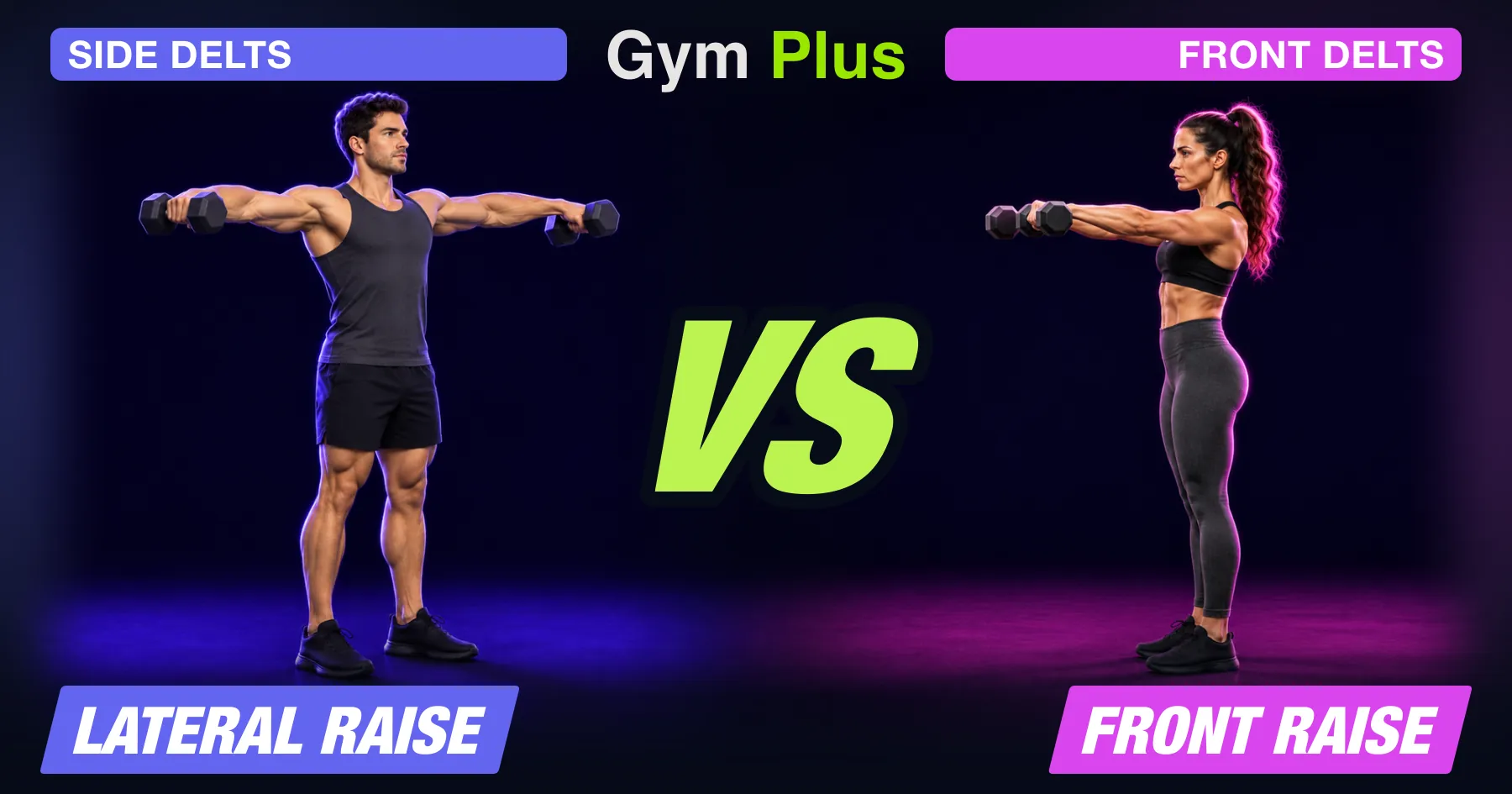
Lateral Raise vs Front Raise
Short answer
Do both, but give the lateral raise most of the sets if you already press. Bench and overhead presses already work the front of your shoulder, so the front raise adds less. The lateral raise trains the side of your shoulder, which gets far less work from the bench press.
Lateral Raise
Lean on the lateral raise for most of your shoulder isolation work, especially if you bench or overhead press. It's the more direct way to train the side of your shoulder.
How to do itFront Raise
Lean on the front raise when you rarely press, or when the front of your shoulder feels like the weak link. If you press twice a week, start with 2 sets once a week.
How to do itHow they differ
| What differs | Lateral Raise | Front Raise |
|---|---|---|
| Direction | Lateral Raise: Out to your sides | Front Raise: Straight out in front of you |
| Main muscles | Lateral Raise: Side delts | Front Raise: Front delts, with the upper chest helping |
| Overlap with pressing | Lateral Raise: Some with overhead presses, little with the bench press | Front Raise: High: bench and overhead presses both work the front delts |
| Top of the rep | Lateral Raise: Arms about level with your shoulders | Front Raise: Hands at about shoulder height |
| Common mistake | Lateral Raise: Shrugging the weight up with your traps | Front Raise: Leaning back to swing the weight up |
| Share of your sets | Lateral Raise: Most of your shoulder raises | Front Raise: A few, or none if you press often |
A week that uses both
- Upper day 1 · Press first, then lateral raise: 4 sets of 12 to 15, stopping at shoulder height.
- Upper day 2 · Lateral raise: 4 sets of 12 to 15. Then front raise: 2 sets of 10 to 12 with a light weight.
- Next week · Same plan. If your front delts are still tired from pressing, skip the front raise and keep the lateral raises.
The weights don't carry over
Don't copy your weight from one raise to the other. They load different parts of the shoulder, and on the front raise your upper chest helps too. Pick each weight on its own: the dumbbell you can lift for the target reps without swinging, shrugging or leaning back. For most people that's a light weight on both.
What the research says
10 competitive bodybuilders did 4 lateral raise variations and a front raise. The front raise showed more front-delt and chest activity than every lateral raise. Side-delt activity was higher in the lateral raise with the arm in a neutral position than in the front raise.
Source: Coratella et al., 2020, International Journal of Environmental Research and Public Health
Workouts with Lateral Raise or Front Raise
Questions
Common questions about Lateral Raise and Front Raise.
Do I need front raises if I already bench and overhead press?
Often not many. Pressing already works the front of your shoulder. In one EMG study of 13 trained men, the shoulder press showed the most front-delt activity of 4 exercises, and the bench press about as much as the lateral raise. The bench press showed far less side-delt activity than the lateral raise (Campos et al., 2020). So if you press, put most of your raise sets into lateral raises.
Why do I feel lateral raises in my traps instead of my shoulders?
Usually the weight is too heavy, so you shrug it up, or your thumbs tip down as you lift. In one EMG study of bodybuilders, a lateral raise with the arm turned in, thumbs down, showed the most upper-trap activity of the 5 raises tested (Coratella et al., 2020). Use a lighter dumbbell, keep your shoulders down and your thumbs level, lead with your elbows, and stop at shoulder height.
Why do raises hurt my shoulder?
A burn in the shoulder muscle is normal effort. A pinch, a sharp pain or pain deep in the joint isn't. Try a lighter weight, stop at or just below shoulder height, and lower slowly instead of letting the dumbbells drop. If one raise still hurts and the other doesn't, drop the painful one for now. Stop and get qualified help if the pain is sharp, lasts, or gets worse.
Should beginners do lateral raises or front raises?
Start with lateral raises if you also bench or overhead press: about 4 sets of 12 to 15 with a light dumbbell, 2 times a week. Add front raises later if you want more front-delt work, or from the start if your program has no pressing.
More comparisons
- Bench Press vs Chest Press
- Chest Fly vs Chest Press
- Deadlift vs Romanian Deadlift
- Good Morning vs Deadlift